Thoughts on (not) doing things right, (not) being convenient and (not) staying small

My family taught me a good girl is quiet, reads a lot, has good grades in school and aspires to have a cushioned job. She learns to raise herself. She doesn't have big feelings, and she doesn't have needs that inconvenience anyone. She is a good girl.
My education taught me that there is always a right answer, just one, and that I shouldn't ask questions - or rather I should only ask some and those shouldn't make anyone think too much. Look interested, but don't be too curious. Don't make them work too hard. People have jobs to do, and curriculum to get through. I was taught that the right answers come from books, not from trying. That my value comes from how well my recollection works, not how epic the fail was. 'You won't get anywhere just by being smart' was the message. I did not have to work hard for my (good) grades. Therefore I would be punished for my lack of the ability to sit with the study material in high school, and will absolutely fail. The important thing is to work hard, not just understand.
Funnily enough I ended up in a profession, where none of that worked. Launching (digital) products was about asking questions, holding several (potentially conflicting) views as true, testing often, and failing. There were no right answers. Even when some strategy worked for another company, it didn't simultaneously translate to ours.
Accepting the methodology when building for others was one thing. Doing the best thing for somebody else was... easy. Made sense. I always thrived on helping others (sometimes even when they didn't want my help 🙈). Doing the same for my own business, was something else.
Being good at work is... a trap
One thing has been becoming very clear as I pay more attention to (my) work, the working conditions, and workplace. And these might be a bit controversial.
- If people around you are very happy with the work you do, you are probably a good girl.
Hear me out. I'm not talking about environments where you're given autonomy to actually do your job, and where it's the data, learnings, movement and challenges that are appreciated. I'm talking about setups where you shouldn't challenge a client, where your job is to navigate several stakeholders with their own agenda, protect the team, and at the same time ship something actually useful to the end users. If you're high achieving, always hungry for more - more challenge, more responsibility, more to do - you're very likely to outsource your own validation to someone else. Been there, done that. - The reward for good work is more work and difficult clients.
It comes dressed as a blessing. As a reward. The company trusts you with the most difficult challenges there are. Feels great. Feels like you're finally being seen and recognised for all your hard work. And while we bang our head against the wall, we tell ourselves this is another lesson that we need to learn.
Let's look at another picture. Think of your most incompetent coworker. The one doing nothing, that everyone complains about, and doesn't change. Once they finally fire him, many times there's a nice severance package to cushion the blow. They can take time off, chill a little, rest a little, and then figure out your next steps. Paid time off? Almost like a sabbatical (if you don't get too nervous about the next steps 😬).
How is that fair? More of the responsibility rarely mirrors appropriate compensation. Not in money, not in downtime. "What are you talking about - more vacation days? We gave you this amazingly difficult job to do, what do you mean you need more rest (or money, or structure)? We need you more than we ever did!"
"You need - me?" The good girl in us - soooo happy. Excited. Music to her ears. So we stay. Grateful for the opportunity. For more responsibility. Uncompensated. We work. We hope. It has to show somewhere, right? Some day, somewhere, they will recognise the value we bring and the effort we put in. And then they will give us everything. The cycle restarts.
The double standard
For a while I worked in a team, where my development counterpart was slightly difficult to work with. He was brilliant, but many times his tone wasn't nice, he would challenge all the decisions made, and he would go on telling on us to our boss anytime anyone made him even slightly annoyed.
We were part of an agency working for external clients. While most of my coworker's 'moods' would be affecting the internal team, it would seep through also to the client side. There was a woman working with us on a day-to-day basis from. She was very perceptive and keen to keep the peace. So whenever he would be in one of his 'moods', she would caution us: 'Today we have to thread carefully, it's one of those days. We don't want to rattle him to much.'
I don't remember what the exact issue was, but at one point it was me, that put my foot down. With the same woman. I communicated clearly what is and what isn't acceptable for me. Instead of understanding and respect, I was met with utter contempt. I was told I am being childish and that my attitude was unprofessional. I wasn't. It wasn't. I wasn't offensive. It wasn't unreasonable. But I also wasn't standing down and changing my tune. There is far more tolerance for this kind of behaviour in men than in women.
The good girl isn't a personality trait
It's a trauma response. It's something we developed to survive in homes where love was conditioned and based on our performance, convenience, and pleasing others. It would be really easy to just blame my parents, but it's more complicated than this. This is intergenerational. Our parents and grandparents were raised in the same systems. Patriarchy uses shame to keep us small. Shame is one of the main tools to keep us wearing the good girl suit of armour.
There's the good shame. The 'natural' one. The feeling that arises when I go against my own values. When I do something that's not aligned with the person I am (or I am striving to be). It's situational, and it's there to help us act better next time.
There's another one. It's toxic. It doesn't deal with what I did, but rather with who I am. It's the judgement that comes from outside. The 'you should be paying more attention to your health', which is obviously about my weight. The 'she's so full of herself', which is about my voice and expression. And the quiet ones. The raised eyebrow when I speak too boldly. The silence when I share something vulnerable. The subtle withdrawal when I take up space. The change in the bodies who think to themselves ''How dare she?".
Doing things right
I was so focused about 'doing the circles the right way' I almost didn't do it at all. I didn't sit in 20 different circles. I don't have any professional credentials. I wasn't just worried I was doing something wrong. I was worried I would be judged for even trying.
This happens to many women. Why we don't start things? Why all of these ideas and interests or passions of ours don't ever see the light of day?
It sounds like this:
- I have so much respect towards the craft. I want to do it justice.
While valid to some extent (not promoting lack of responsibility here), this one is helping you hide. You don't want to be visible. You don't want to expose yourself and give people the opportunity to judge you. - Who am I to talk about this? I am not an expert (even when I am) or there are other people who are much smarter than me?
There never will be a time, where you'll know or be prepared for everything (if you do, you've probably taken a wrong turn somewhere). You're seeking permission from an outside source. Until you take that authority for yourself, there will always be another thing you need - another course, another book, another mountain to climb before you are ready. - I'll start when [enter your favourite delay reason].
When the kids are bigger, when I have savings, when the market is better, when I finish this project (no one else at the company can do it but me), when my life feels calmer, when I get that certificate... There's always something. We keep waiting for perfect conditions, but there are no perfect conditions. Ever. Never is life simple, and calm, for a longer period of time. Where we can rest for long enough to feel ready. That's just not how it works. I absolutely believe in radical personal responsibility - where we co-create our circumstances. We are always choosing, even when we feel we don't actually have a choice.
Three of my favourite ones, and they are still present. They are still a part of me and my thoughts. The difference is a) I recognise them, b) I know what they mean, c) I can acknowledge them and move through them.
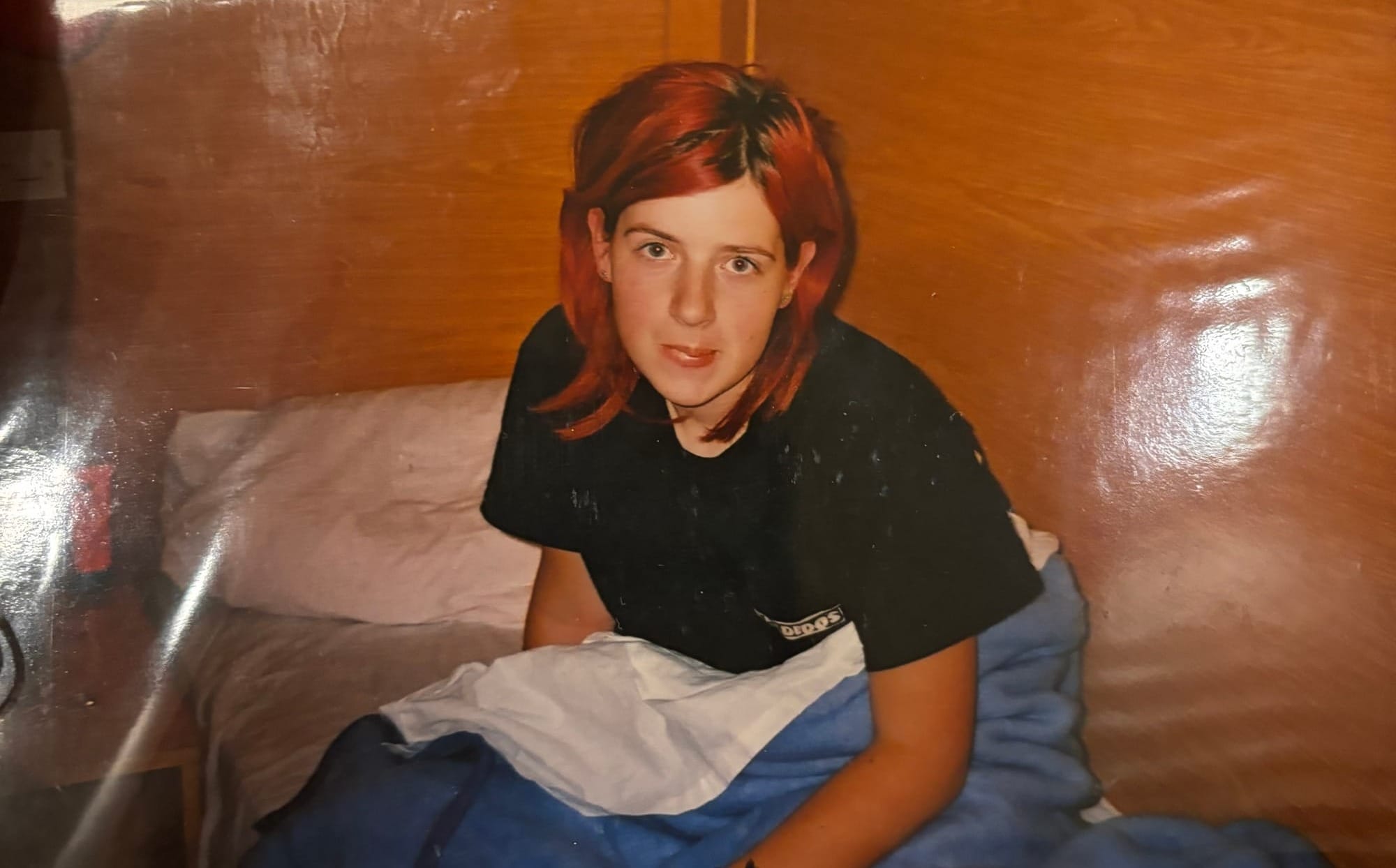
Making myself smaller
The other day I noticed I make myself smaller when I talk about something I've built and am genuinely proud of.
Example nr. 1: I told the group of women I dance with about my weekend event, where I'll support women who started building their own businesses and paths. And while talking, I added I'm nervous about it. And when they started offering their support and telling me I'll do just fine, I realised I'm not nervous. I know it's what I'm supposed to be doing, and I'll do just fine. So why did I say it?
Example nr. 2: On Friday I took my class of students for a drink, since we finished the lessons. When we talked about staying in touch, I suggested they follow me on IG, and told them I feel silly about asking them to do that. Again, it wasn't true. I'm proud of my content. I would love to connect with them. And I wasn't feeling silly. The thought that did cross my mind: maybe it is inappropriate. At the same time, we finished the class, and I didn't ask them to pay a subscription on my OnlyFans account 🙃.
It's an old programme still running somewhere in my subconscious. Stay small, don't show yourself, don't be too much. Don't be too much. Don't be loud, don't be big, don't have big feelings, don't have needs, don't expect anything from anyone, don't express yourself that way, don't flinch, don't feel, don't be an inconvenience. Don't cry, don't let them see, don't show love, don't be weak. Don't create, don't build, don't write, don't speak. Don't challenge authority, don't go ahead, always wait for permission. Don't be angry, don't be annoyed, don't be inconsiderate.
Don't be THAT girl.
There's a cost
It's f*ing exhausting being a good girl. The people pleasing, the expectations, the overachieving, the performing, the fixing, the keeping it together. This is where much of the burnouts start. Taking on responsibility for everything, but there's little we can actually change.
I don't know many women, that are untouched by this. I do know women who are waking up and reclaiming parts of themselves they had to quiet down. Creating their own paths. Listening to their inner voice. The intuition.
The first step is to recognise there is a voice. It will be a whisper. Then you have to act on it. If you do, the voice gets stronger. It will demand changes from you. Things will need to shift. You know it. You knew it for a while now. It won't be easy. But it will be rewarding. If nothing else - you will limit your amount of f* available for external distribution 😉.
Journaling prompts
If you're interested in getting more into this topic, here are some journaling prompts. I suggest you make yourself comfortable, light a candle, and pay attention to how your body feels during this exercise.
- Where in my life am I choosing approval over truth right now?
- What part of me am I afraid will be “too much” or “not good” if I fully express it?
- If I trusted myself completely, what would I say, do, or stop tolerating?
- What is one small, brave way I can honor my truth today—even if it risks disappointing someone?
I am also hosting an online women's circle on this topic on Friday, May 29th, at 6 pm Maribor/SI time. More information about the event here.
If this is the first time we're meeting: Hi, I'm Amedea. After a successful career in tech, I'm building my own business. I coach other women to do the same. Check out my website.